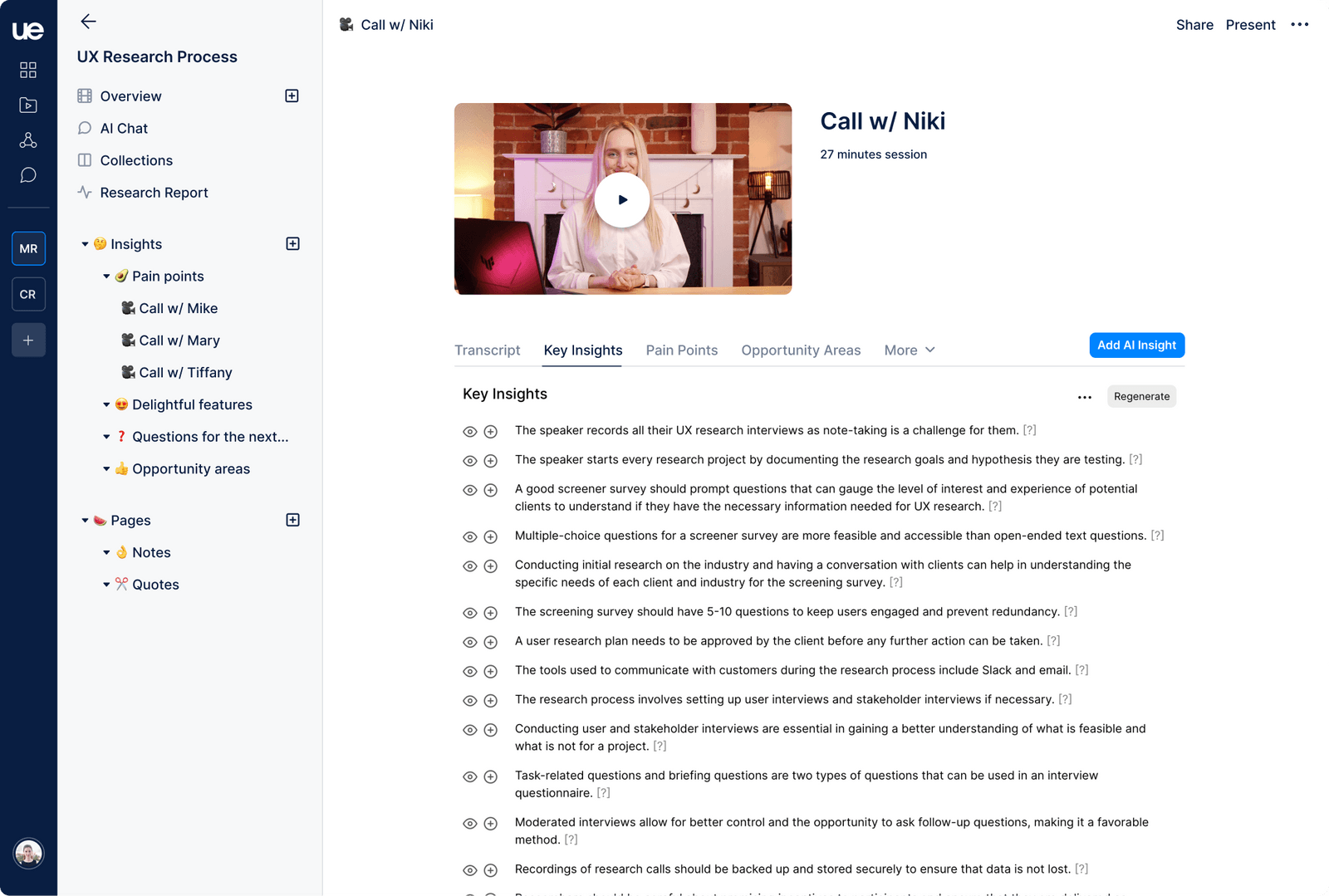
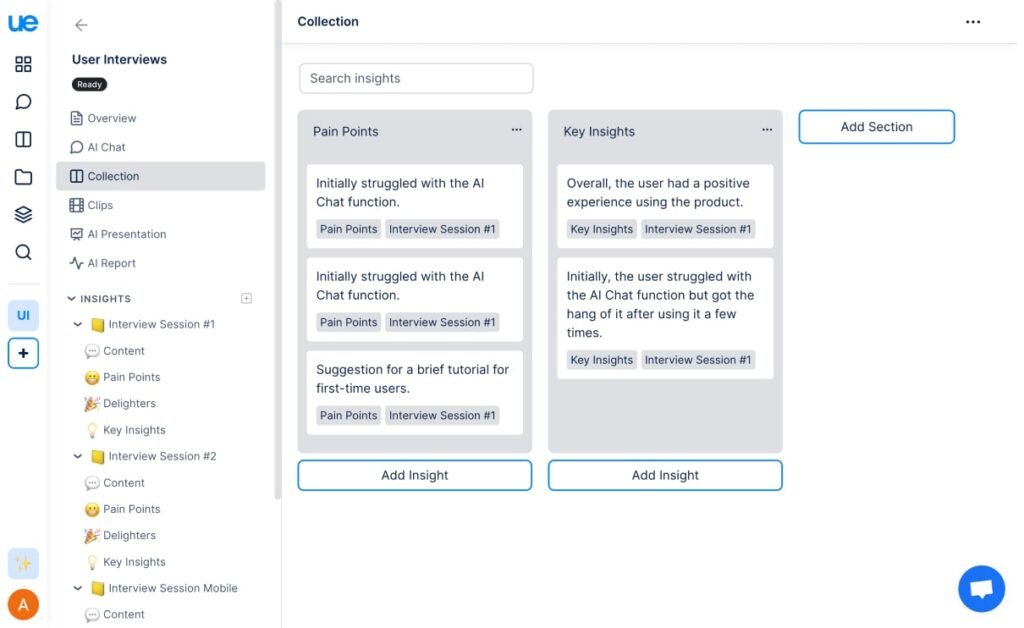
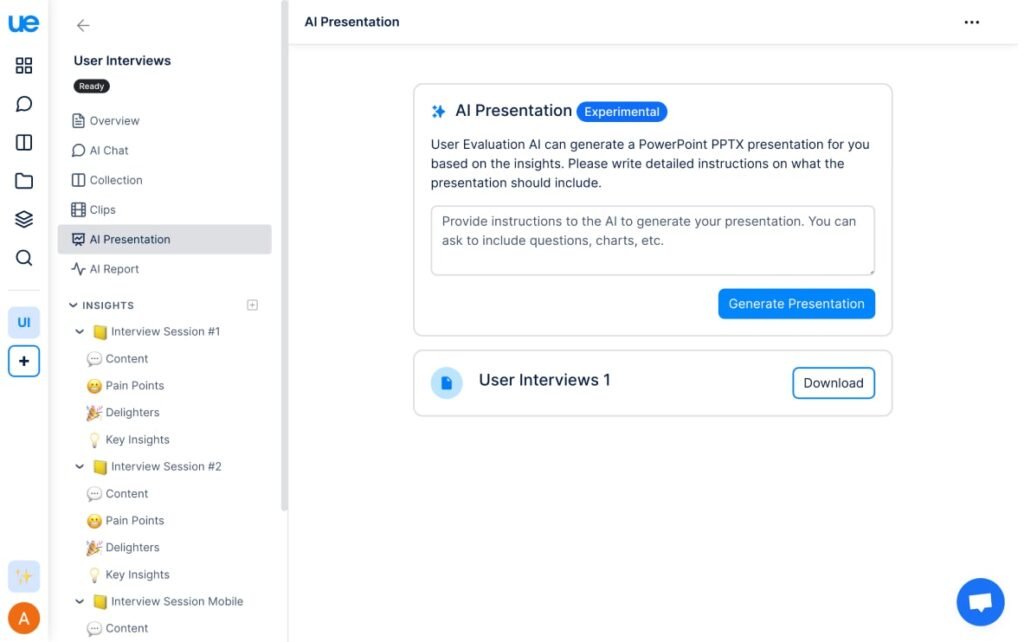
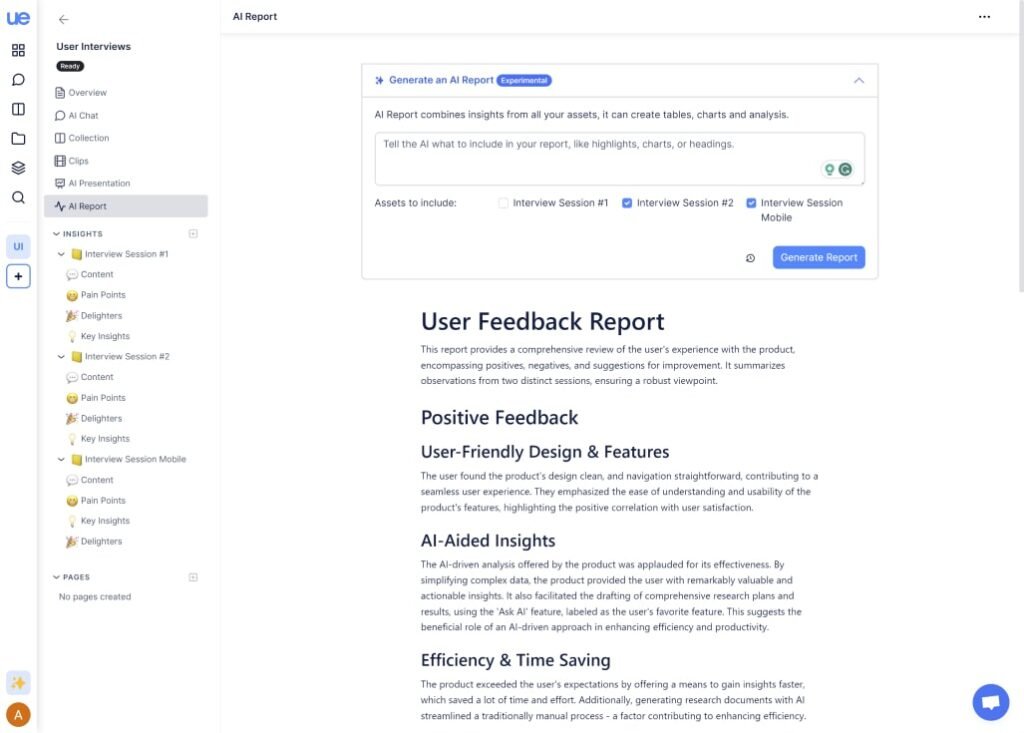
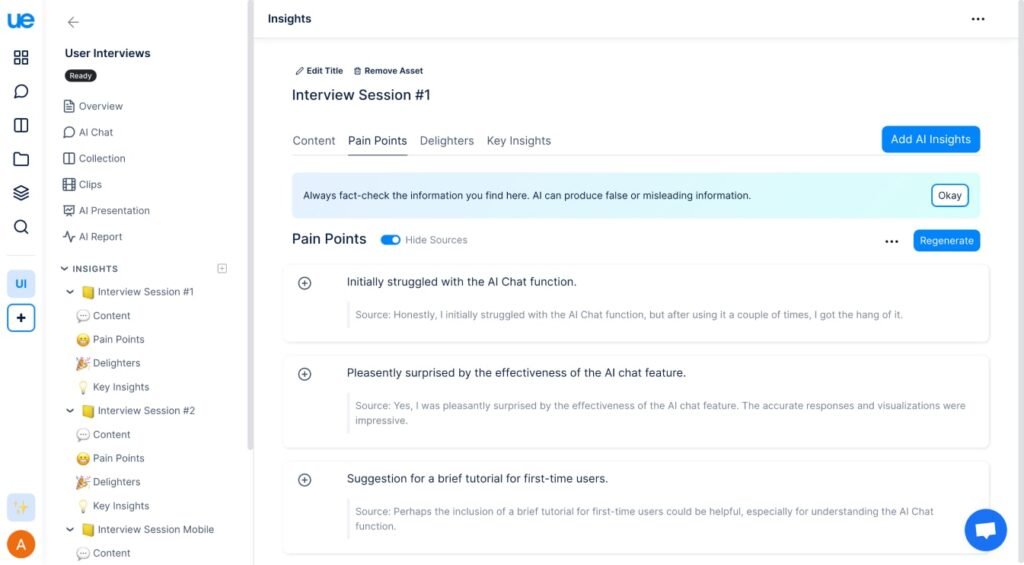
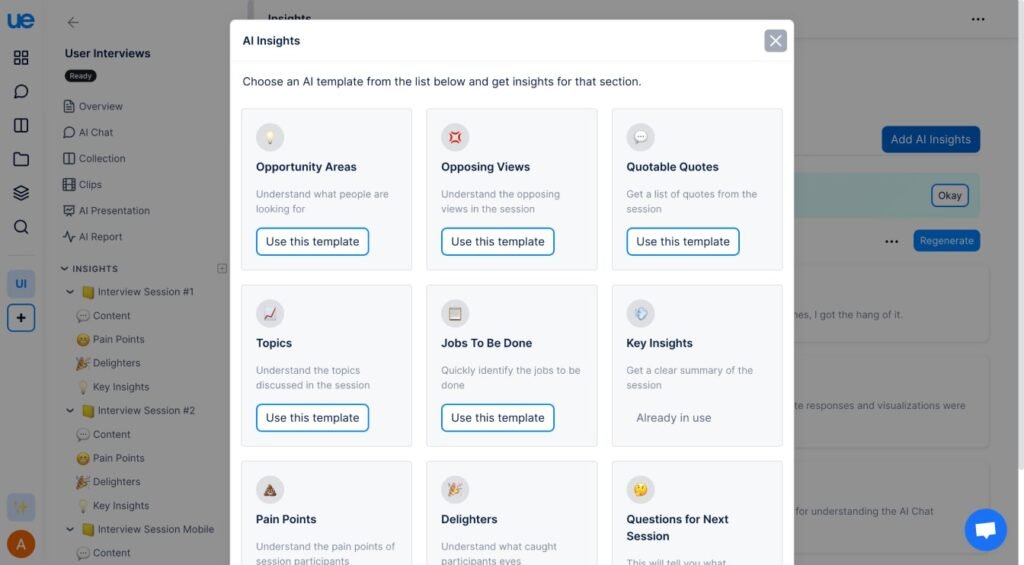
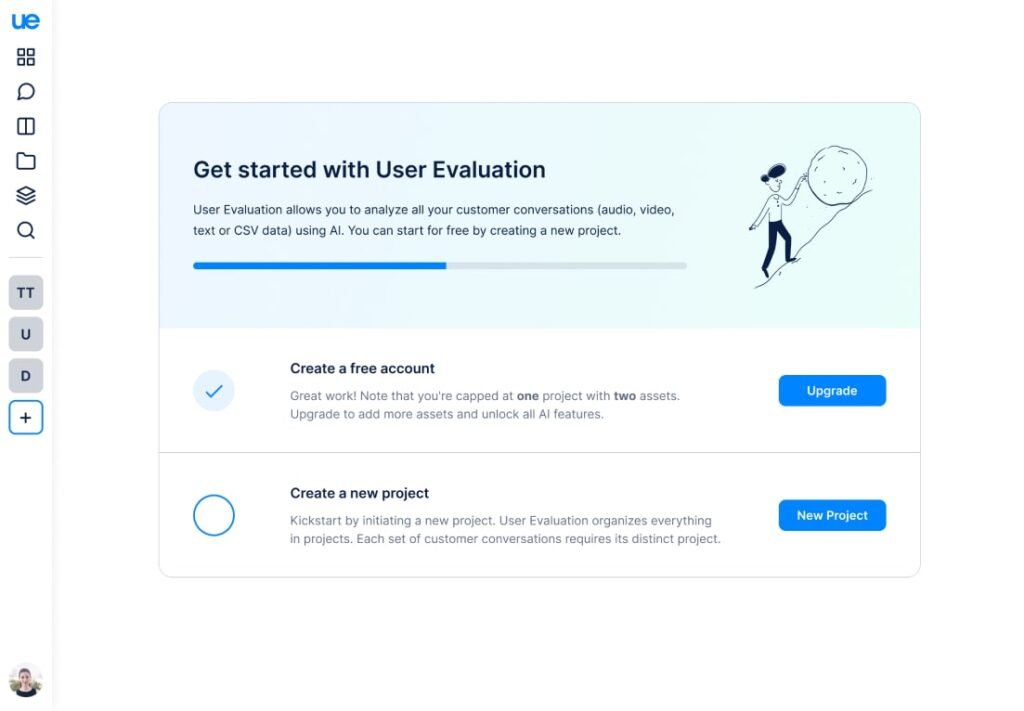
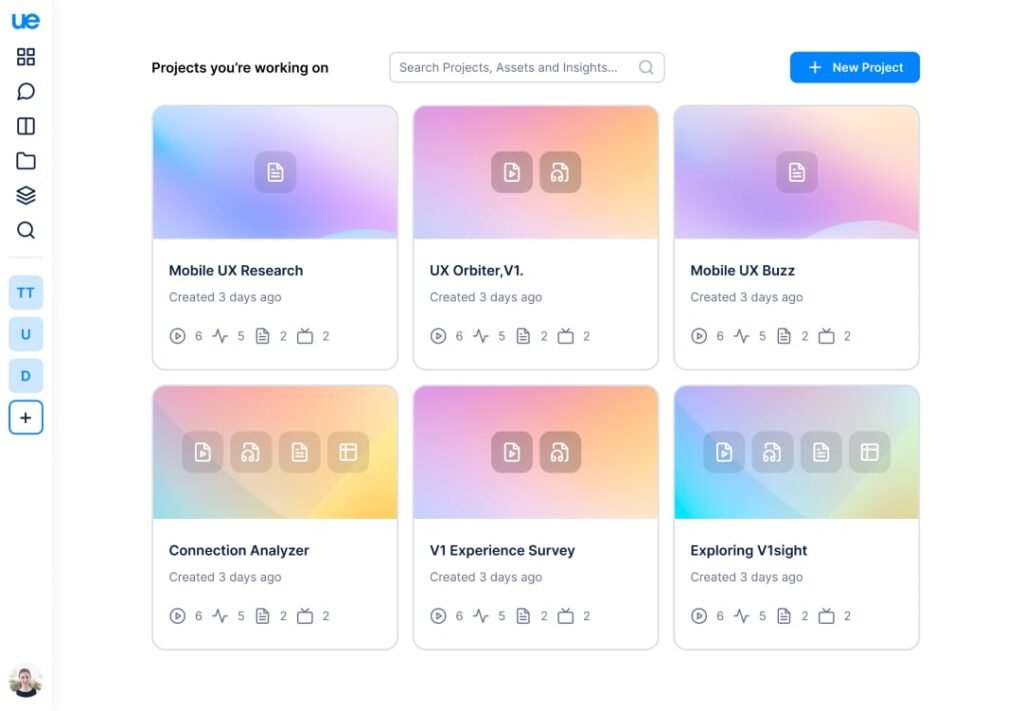
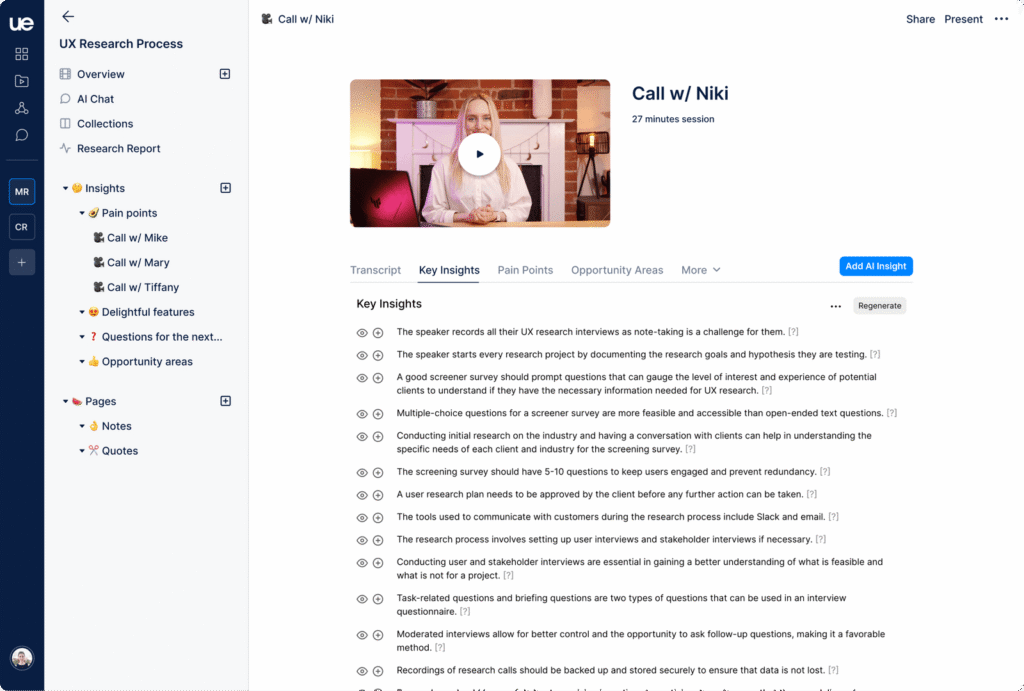
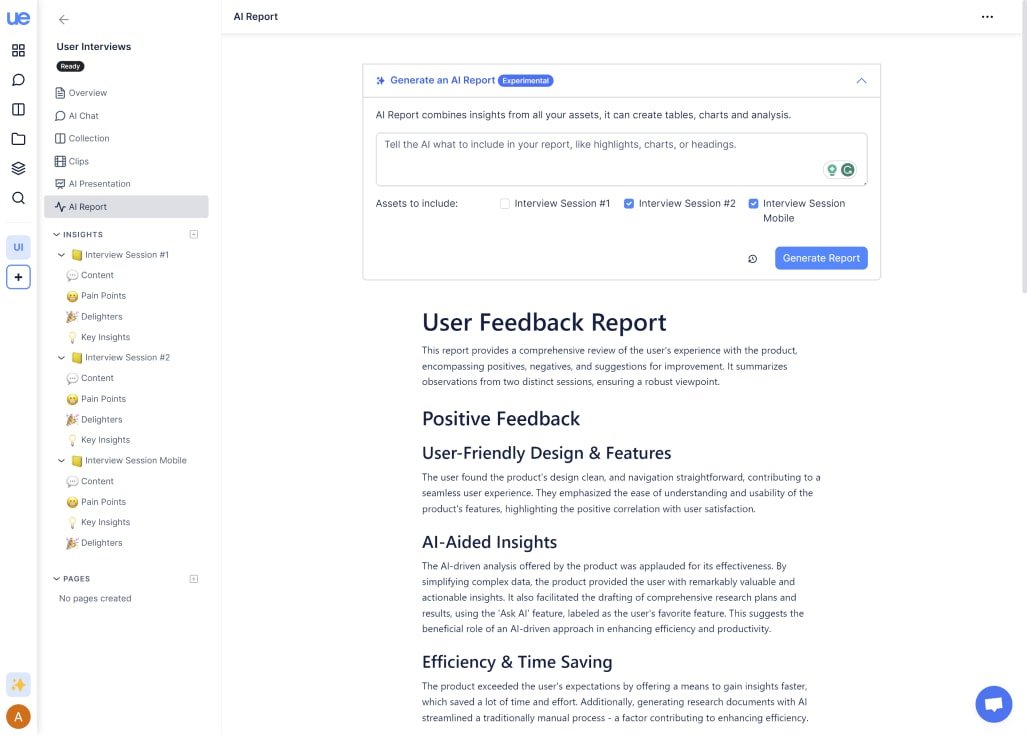
User Evaluation is a transformative AI-powered tool that is revolutionizing the field of customer experience research. By integrating AI into the user interaction and data analysis process, UE streamlines the research writing, generates precise interview summaries, generates charts, and presentations, and conducts trend analysis.
Role
- Product Design
- Prototyping
- Frontend
- Backend
- Open AI & LLM Integration
- Quality Assurance
- DevOps
- Scaling and Security
Stack
React, Next.js, Typescript, Node.js Express API, Microservices, Cloudworkers, Mongodb, Firebase
Statistics
- 500+ Top Tier Companies
- 120k+ Insights Generated
- Top Product on Product Hunt
😢Problem
Before modern solutions, customer and UX research was slow, costly, and error-prone—demanding extensive manual effort to sift through interview recordings, extract insights, and create visual reports. The process drained resources and left room for human error, making it difficult for researchers and businesses to move fast or make fully informed decisions.
😊 The Solution
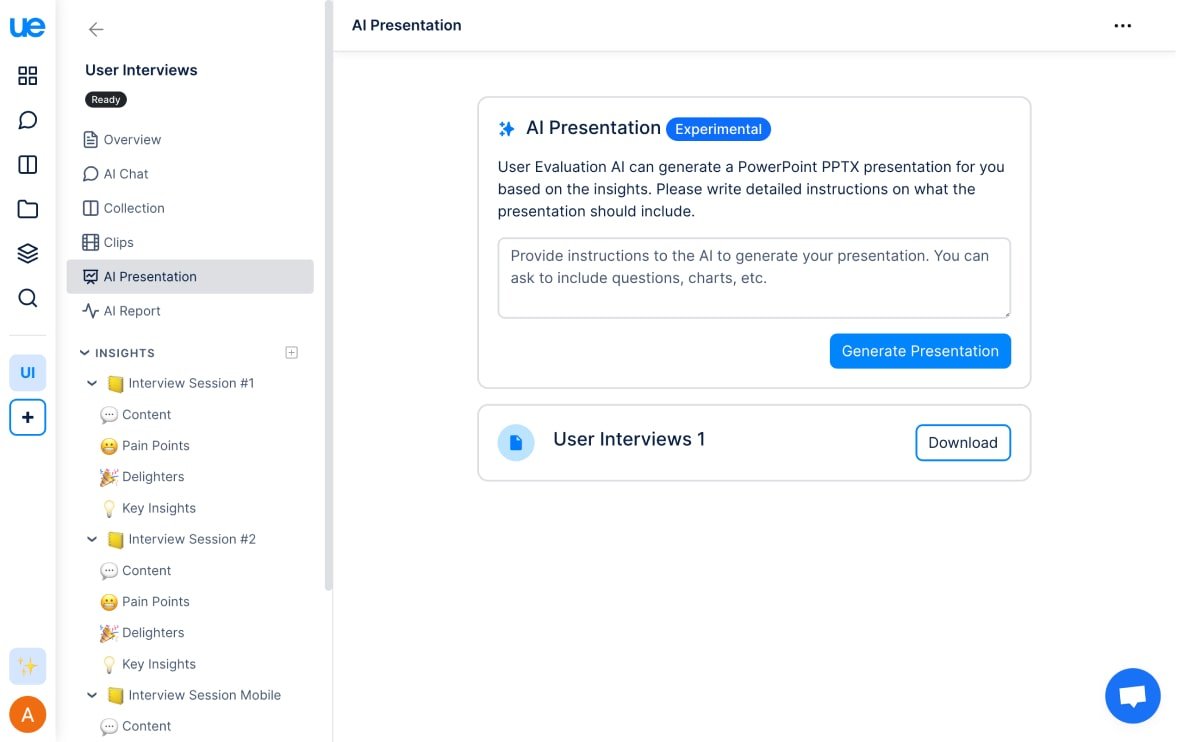
User Evaluation redefined customer and UX research by harnessing AI to eliminate manual bottlenecks and supercharge productivity. It automated key tasks like interview summarization, chart generation, and presentation creation, enabling faster, more accurate analysis. With built-in trend detection and deep behavioral insights, the solution empowered researchers, designers, PMs, and founders to extract meaningful outcomes at unprecedented speed and scale.
🚀 Our Design Process
Utilizing the Double Diamond model as the backbone methodology ensures a holistic and user-centric approach to problem-solving.
01. Discover
Interviews, Research & Competitor Analysis
02. Define
Problem Statement, User Stories, Feature Mapping
03.
Ideate
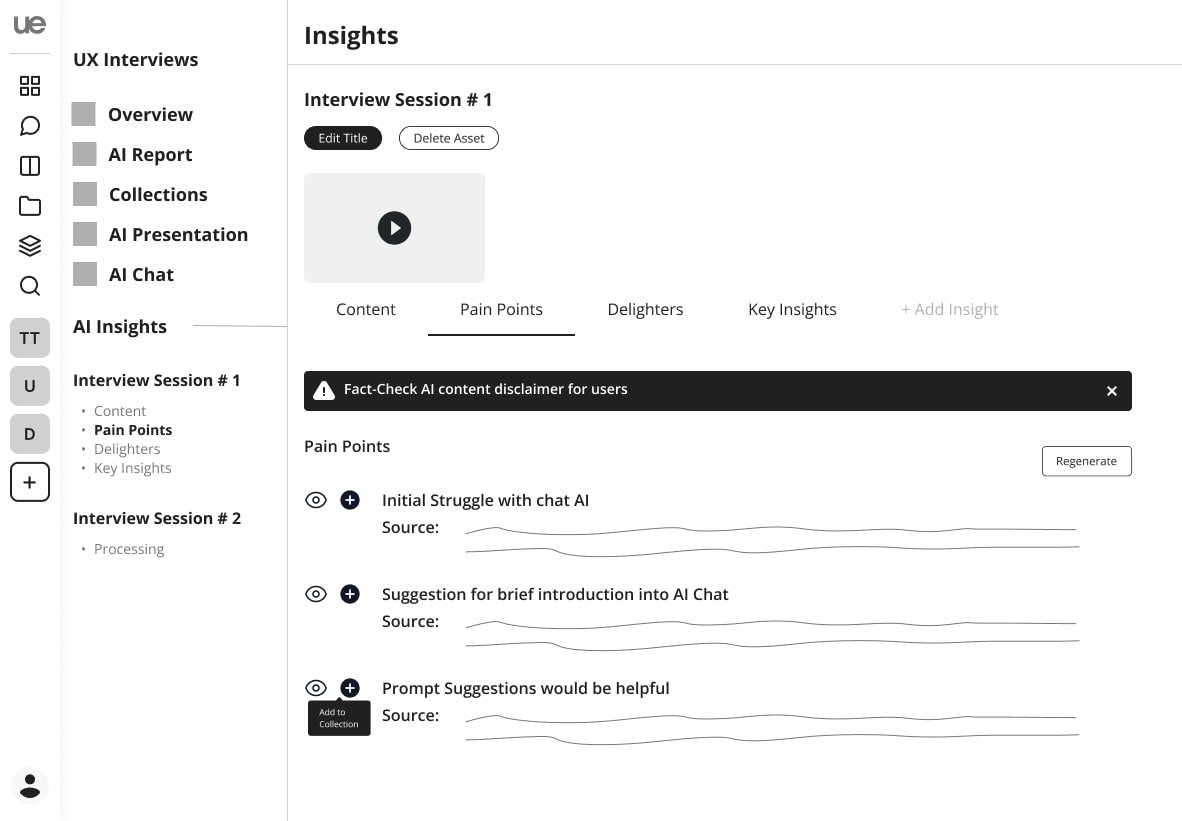
LOFI Wireframe, User Testing & Present to stakeholders
04. Implement
Hi-Fi Design & Development
Decoding the Complexity of AI
Challenges
Working with OpenAI’s GPT API during the early stages of User Evaluation posed a unique set of challenges. As generative AI was still new, we had to rapidly experiment, adapt, and learn its nuances—all while keeping user needs central to the design. Our users were equally unfamiliar with AI-powered tools, which made intuitive design crucial. Collaborating with prompt engineers required a solid understanding of LLM behavior, pushing us to bridge the gap between cutting-edge technology and user-friendly experiences.
Approach
To overcome these challenges, we actively explored the capabilities of GPT-4, DALL·E, and other AI models through hands-on experimentation. We benchmarked leading AI apps like MidJourney to broaden our perspective and refine our product thinking. User interviews, behavior analysis, and heatmaps informed our iterative design improvements. To deepen our technical fluency, we engaged in targeted learning on LLMs and leveraged our development background to work directly with APIs and prompt structures—ensuring both usability and technical precision.
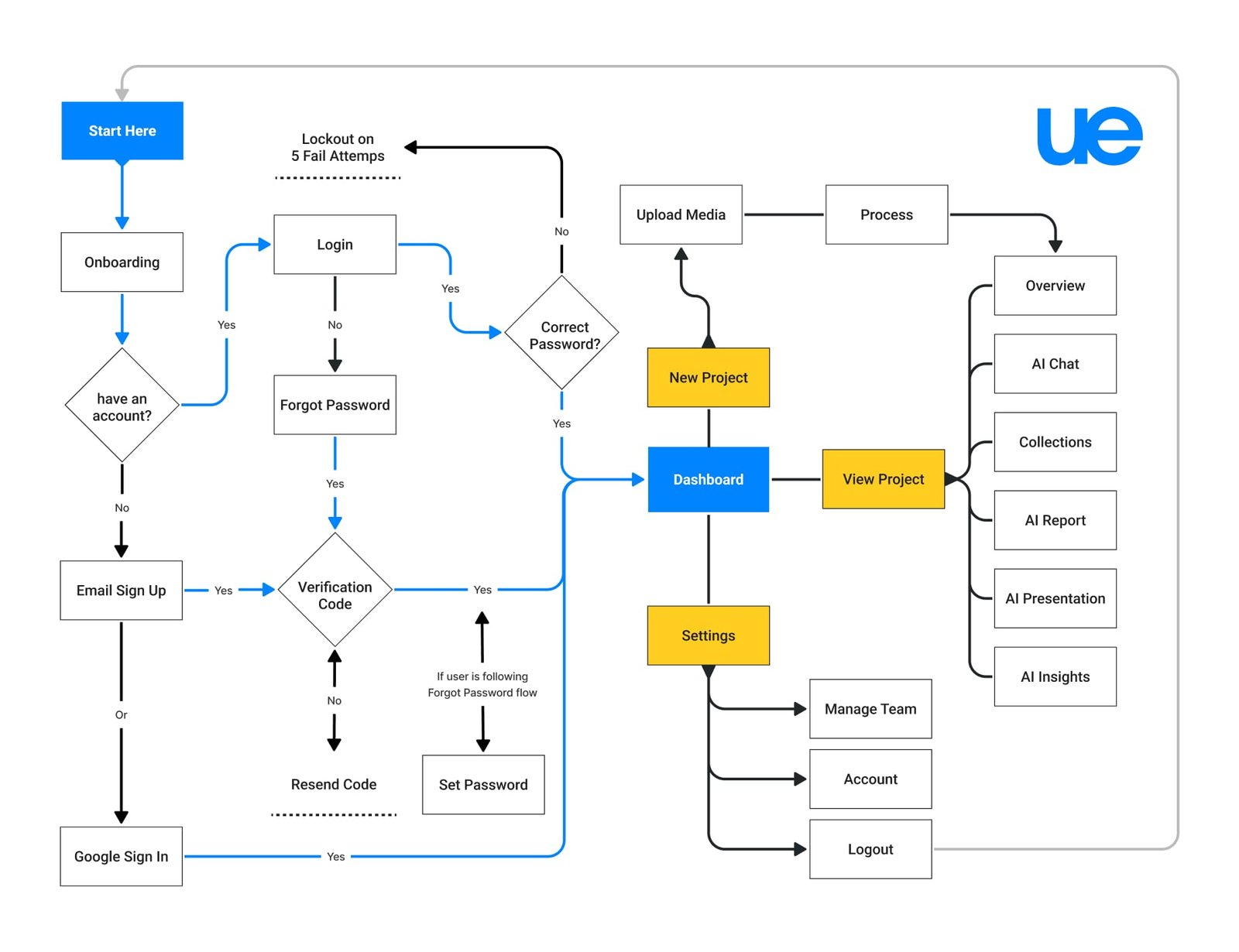
🧭 User Journey Map
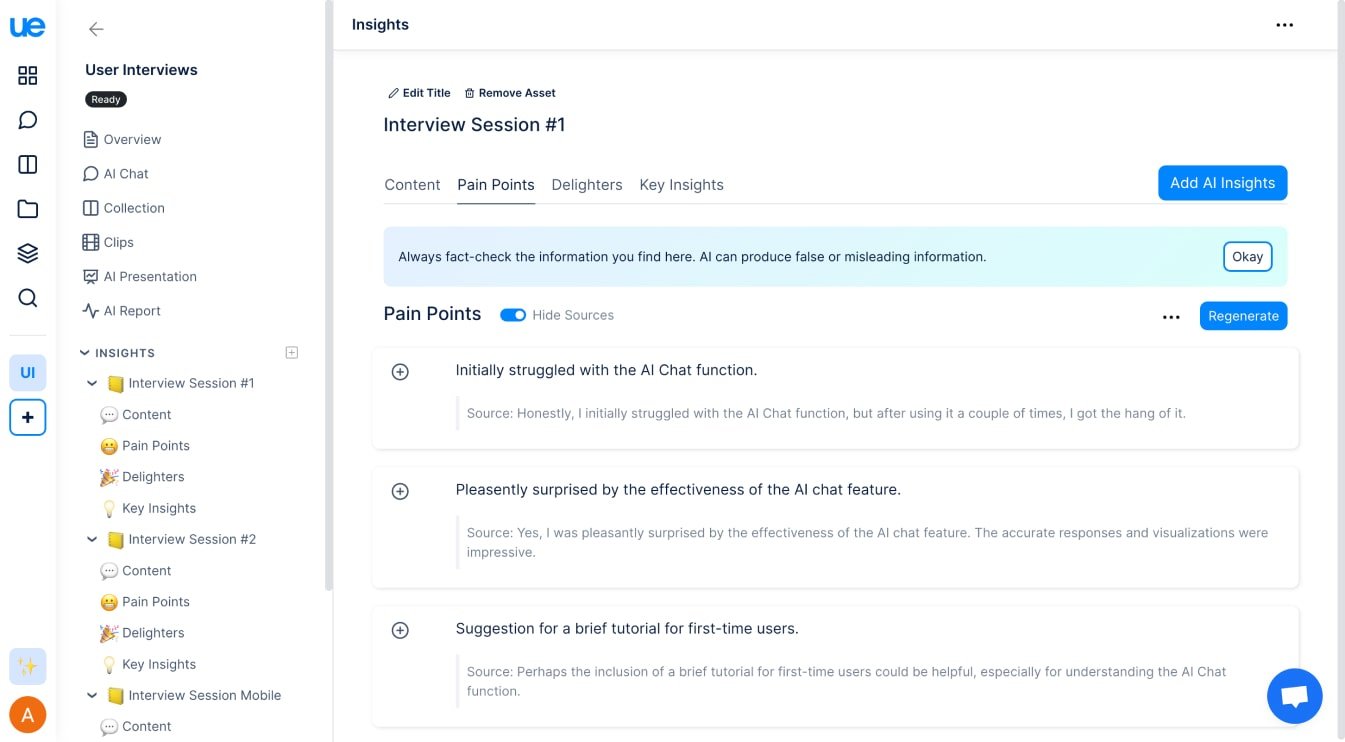
Trace the routes users take, understanding their preferences, pain points, and moments of delight. A comprehensive look into their experience.
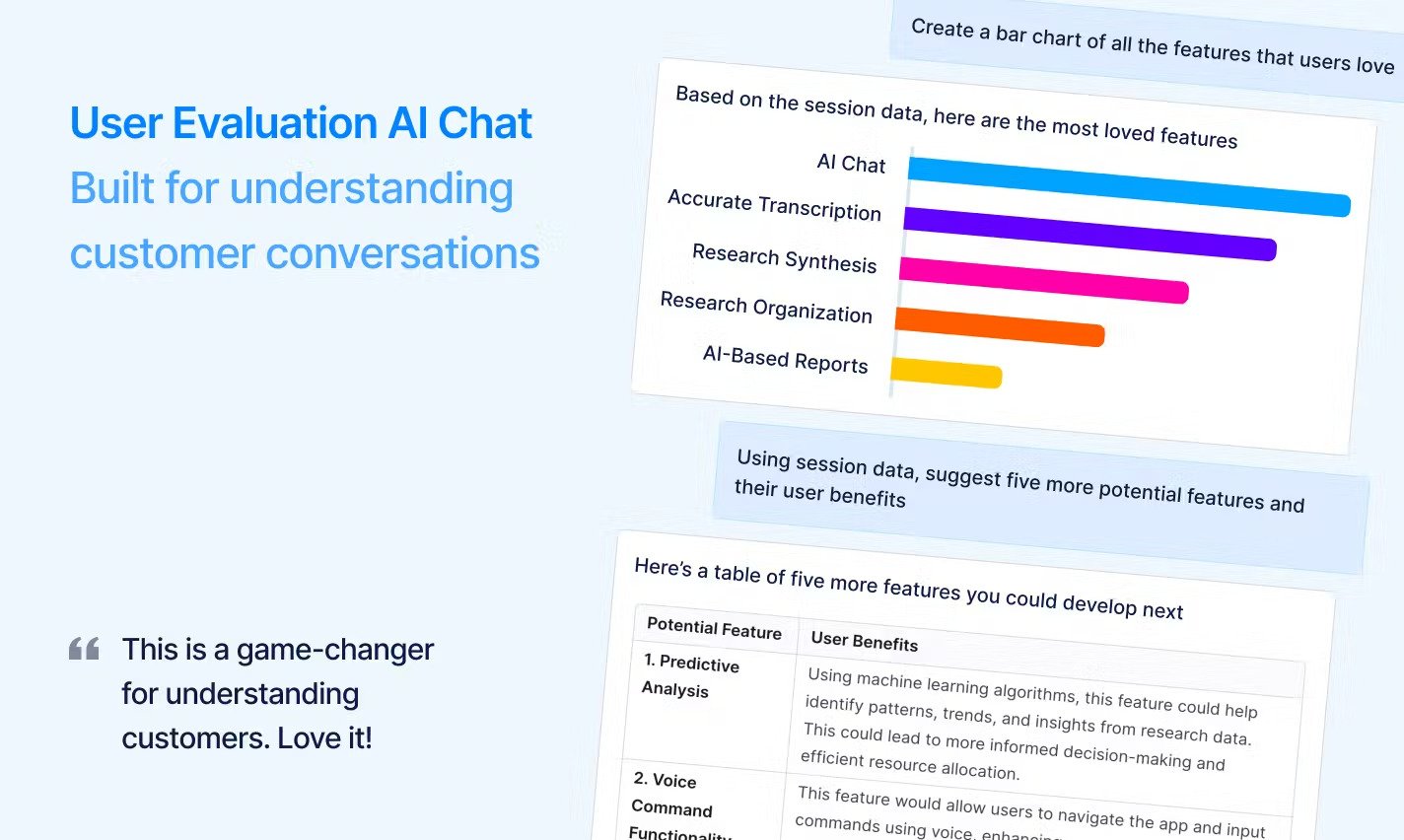
💬 AI Chat
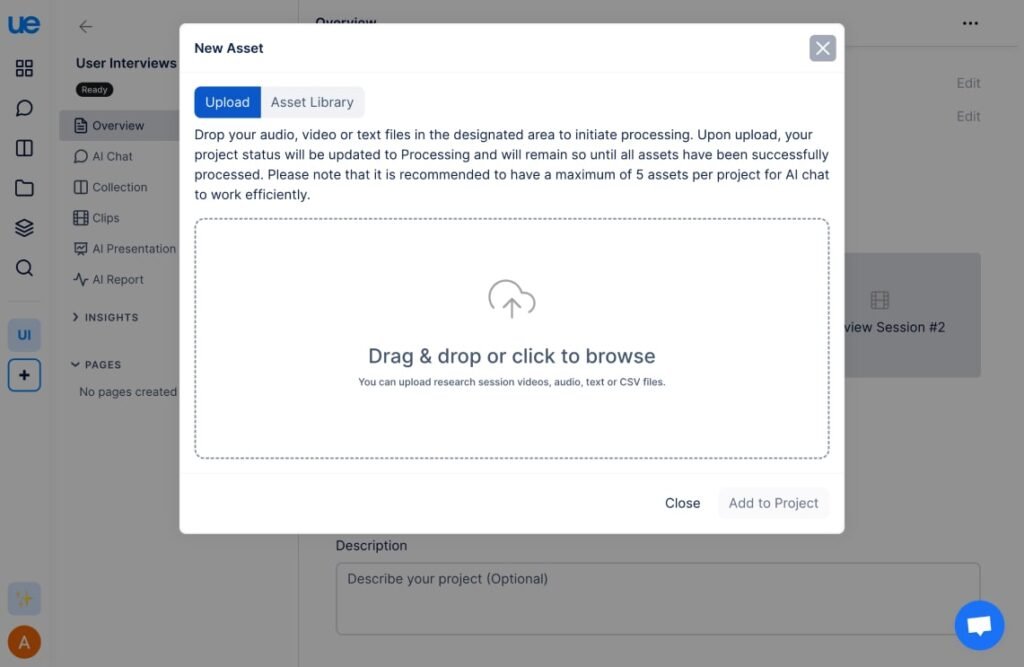
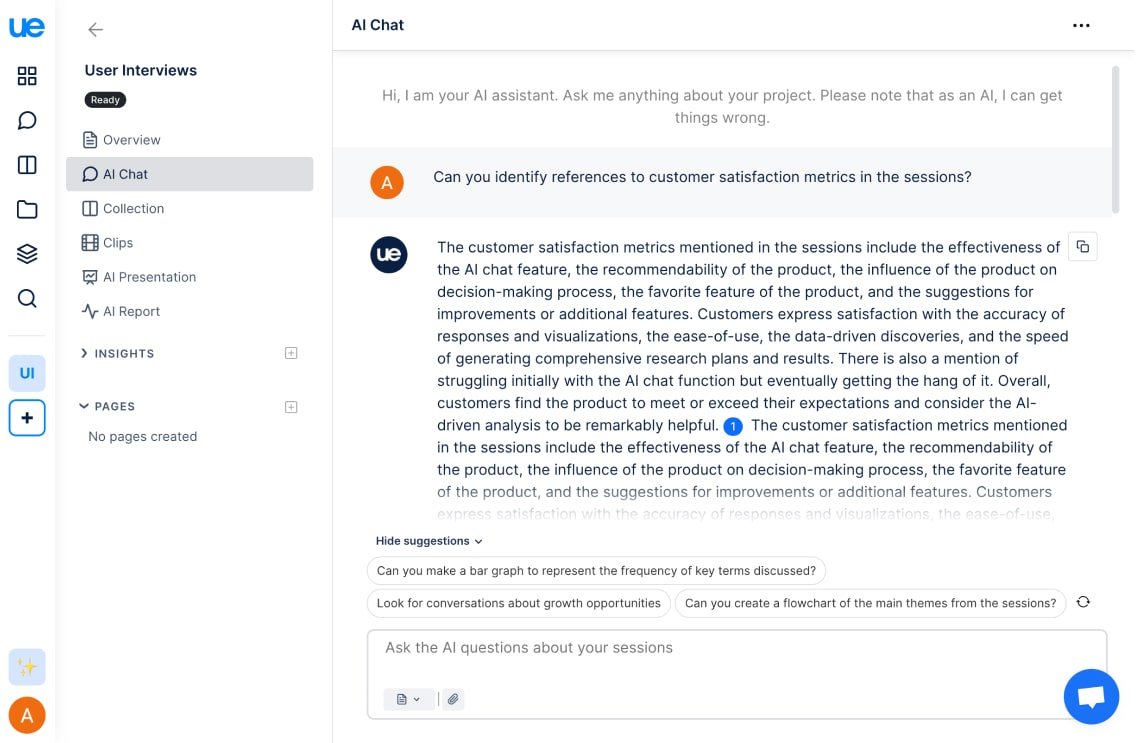
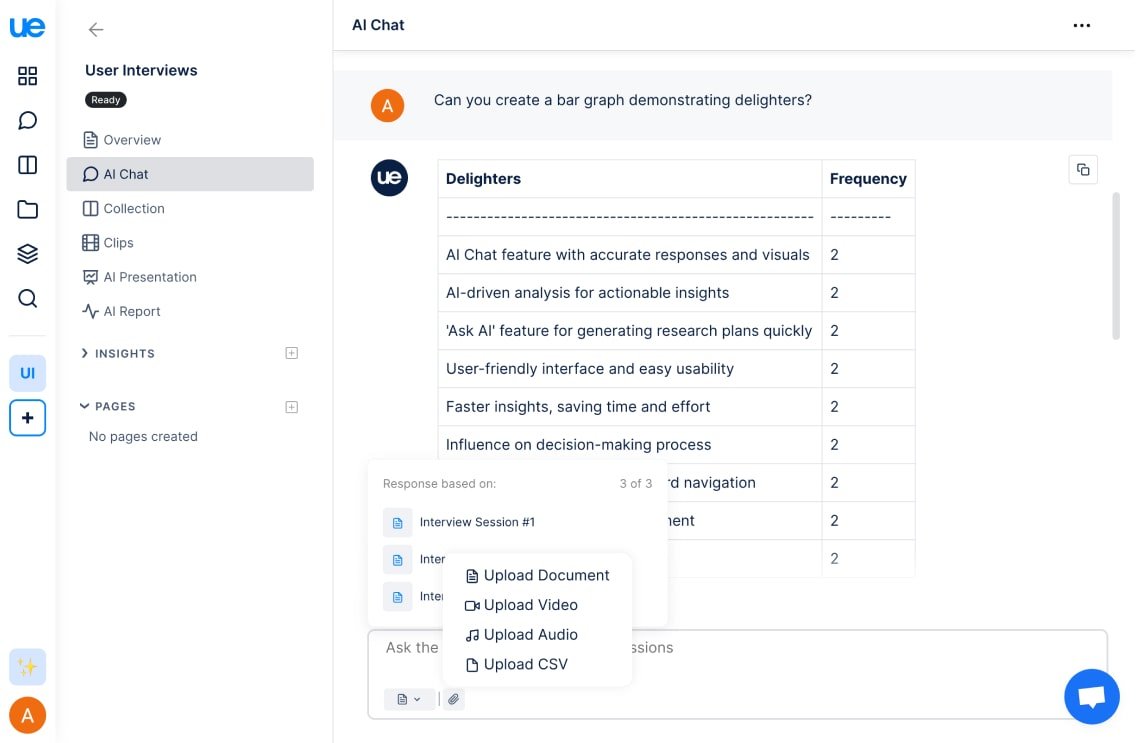
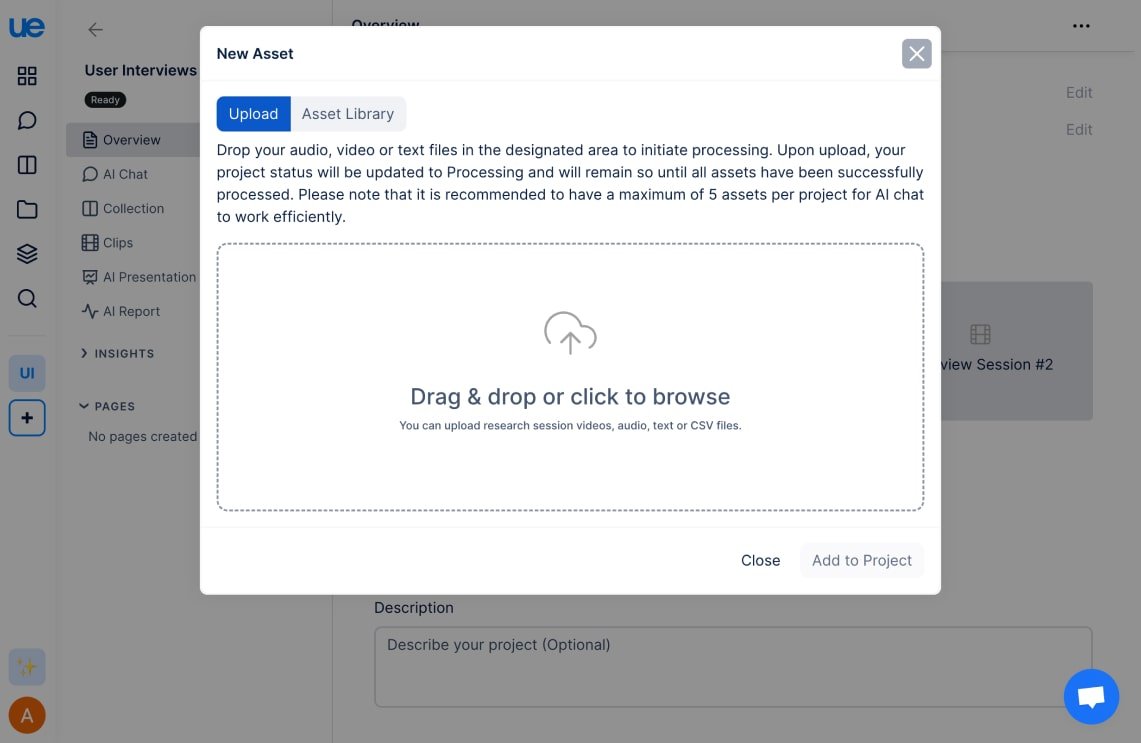
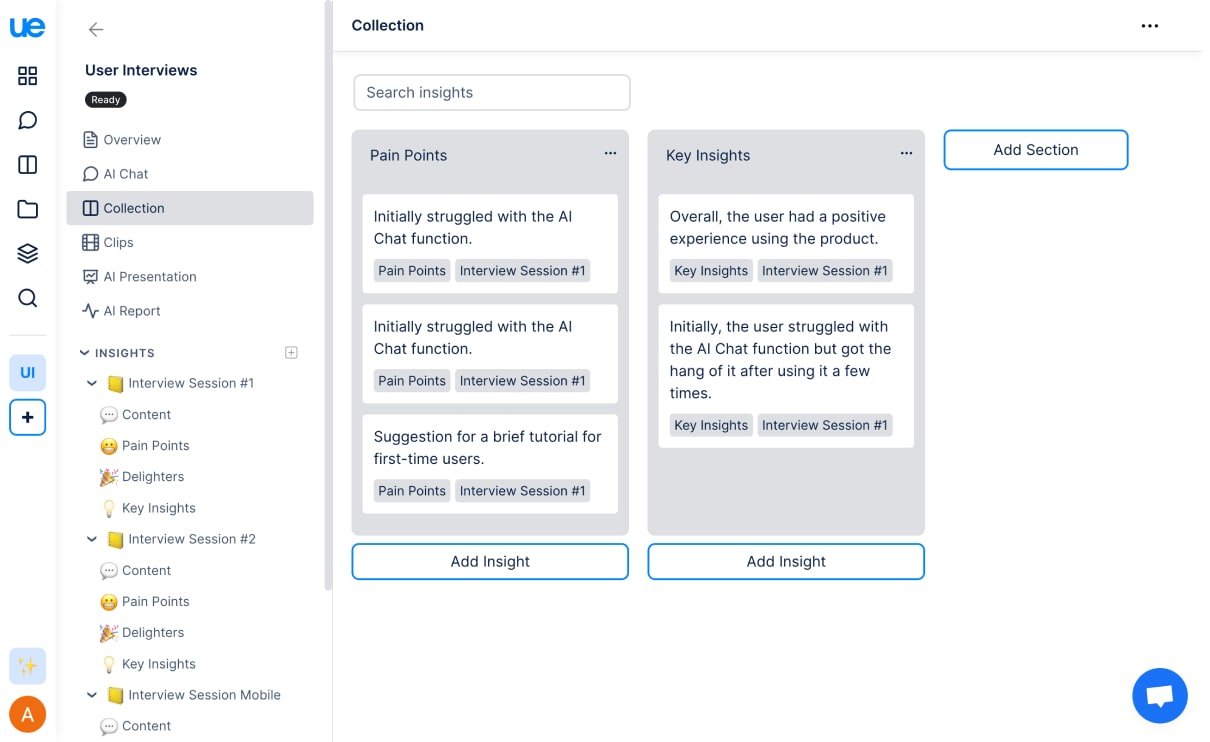
We designed and developed a conversational interface that streamlines interaction with advanced AI models. From architecture to UI, our focus was on delivering a seamless, intuitive experience that made complex AI capabilities accessible to all users. The solution emphasizes clarity, responsiveness, and user comfort—ensuring both technical performance and high usability.
Accessible UX
Creating Universally Accessible Experiences
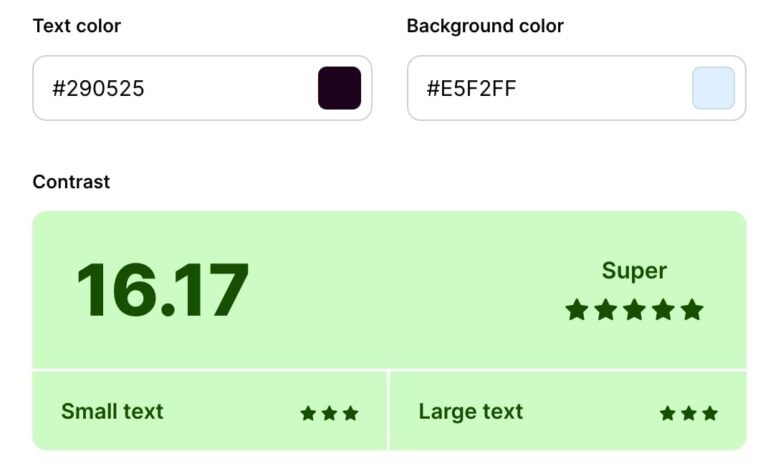
Accessibility is treated as a foundational principle, not an afterthought. Every product we design and develop considers inclusivity from the start—ensuring interfaces are usable, intuitive, and enjoyable for all users, regardless of ability.